In 2005 I was studying my MA in writing and had been working at THE AGE newspaper for 5 years, when I had the idea that would be my first published book: Literati: Australian Contemporary Literary Figures Discuss Fear, Frustrations and Fame (John Wiley & Sons, 2005). What followed were discussions with 21 Australian literary figures.
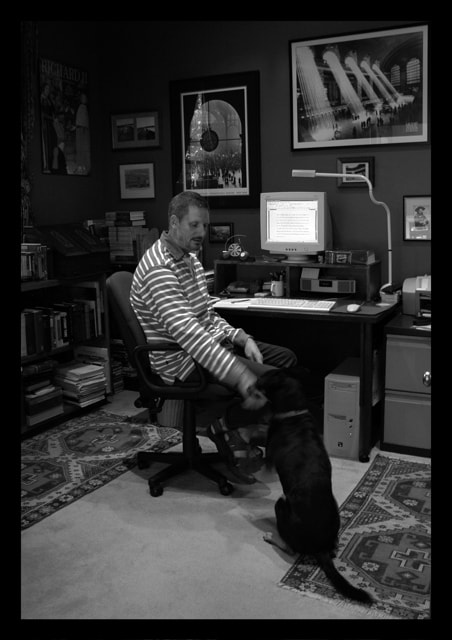
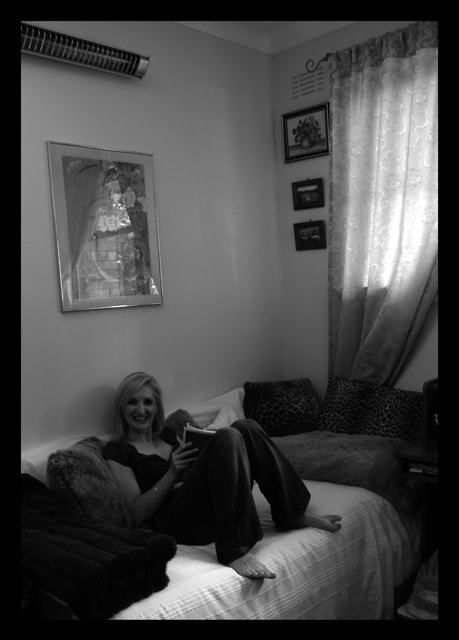
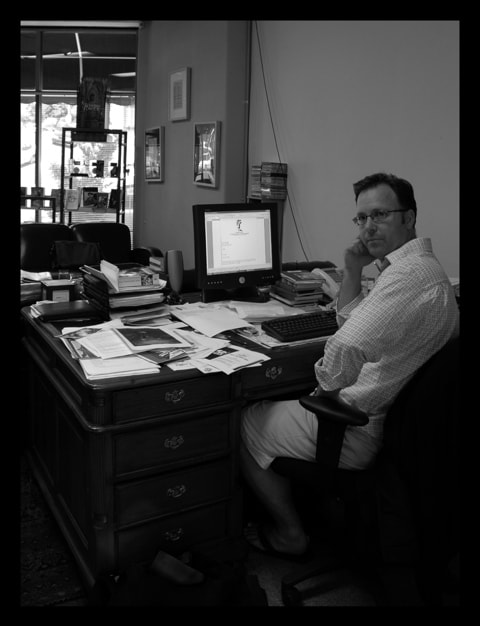
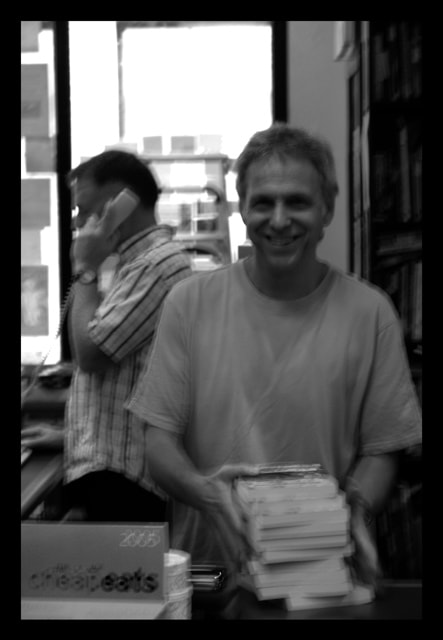
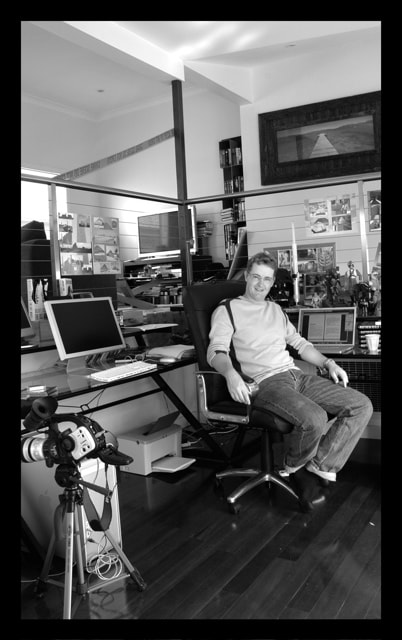
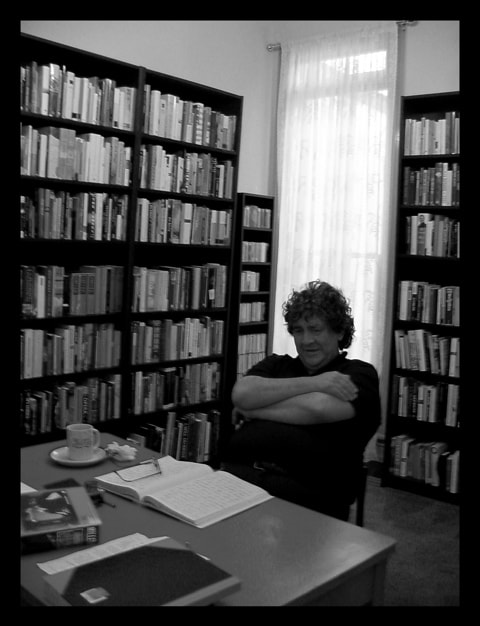
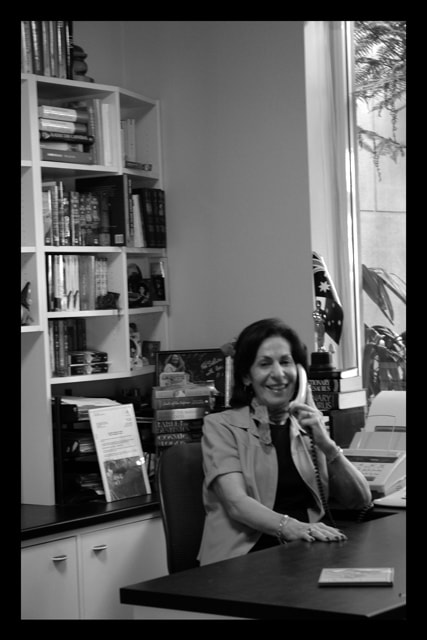
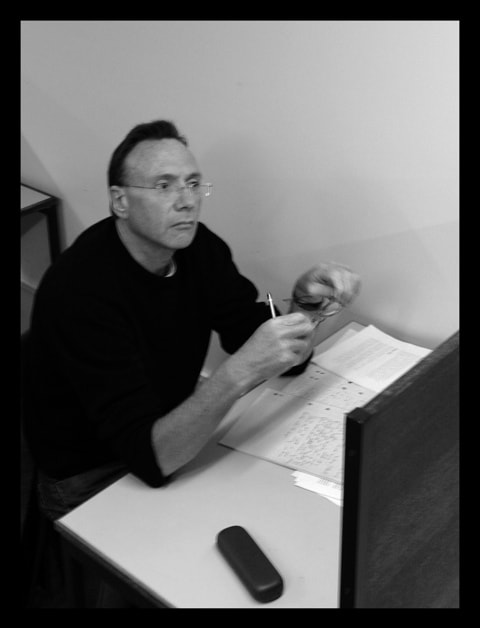
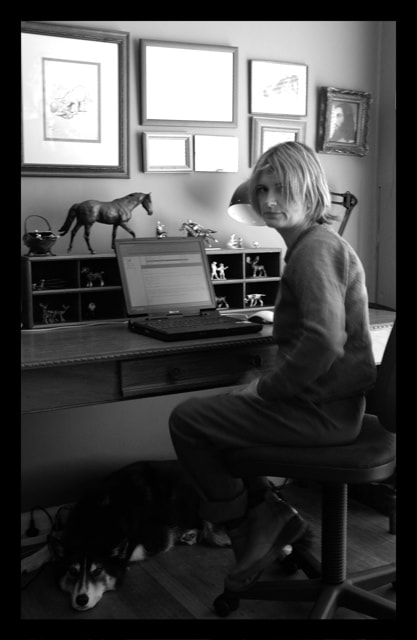
Each interview went for around 2 hours, and were recorded. Those 20,000 or so words of each interview were then edited down to around 5,000 words to fit into the book. Each interviewee was photographed at their workspace, to give an insight into their creative space. Here are short samples from the 21 interviews:
Belinda Alexandra
When you looked again at that work, what was the turning point
when you realised, ‘Oh no, I’ve got to change this’? What was it in
there, do you think?
I thought it was historically accurate and an interesting story, but
it didn’t sweep me away. It just didn’t take me away somewhere,
and it didn’t affect me emotionally. I realised that unless this work
really affected me emotionally then it wasn’t going to affect
anyone else. That’s not just talking about being melodramatic or
romantic in your writing so that you sweep people away; it’s really
taking them into another world where they feel what the character
feels and really care what happens to this character. When a char-
acter’s stressed, you make your reader feel stressed as well. You’re
very cruel, in a sense, in that way to your reader.
Yes. Was this White Gardenia?
No, actually. When I was at the University of California, I was
very influenced by American writers — I didn’t really look towards
my own country so much. I almost followed their style and I wrote
a ‘chick lit’ book, which is how I ended up with Selwa as my
agent, because I took it to her and she liked it, and she showed it
to every publisher she could. And it was rejected by every pub-
lisher. At the time it was very tough. I had spent so much, given up
so much social time to writing this book. I knew the book was
good. It wasn’t so much the book that was the problem, but me. It
would go to a sales meeting and the sales team would say, ‘How
do we market her?’ It was a real ego bash, because I had been to
uni and had done this course and I was going to be a fantastic
writer. I had spent long hours on the full manuscript to have it
completely rejected by everyone, and that whole process took two
years. It would go to a publisher, and you would have all that
tension and then it would be rejected and then we would try
another one and it would get so far up the scale and then slide
down.
At the same time, and looking at the big picture, that style was
not something I could grow with. So although it was hard at the
time, it was a good thing to have happened. Also, my later books
allowed me to explore history a lot, whereas humorous writing
really doesn’t allow me to do that. I was pleased it happened and
also it has made me a bit humble. White Gardenia has been very,
very successful, but I never let that go to my head or get slack. I
worked very hard at my second book, Wild Lavender, because I
know you are always one second away from a failure, and it may
not necessarily be because your book isn’t good.
I’ve read a little quote of yours: ‘Every result is an asset’. Is that
something that you learned from that process?
Yes, that’s right, but sometimes it takes a little maturity to look
back and see it that way, because when you are in the middle of it
you just feel like a big failure, and I did feel like it wasn’t going to
happen for me. I think that’s why it was a watershed moment
when I decided to rewrite White Gardenia and to spend another
two years working on that book. You do have to be brave because
at that uni age everyone says, ‘Come on, let’s go out’, and you say,
‘No, I have to work on my book!’
I can sympathise with that.
Well, the payoff is worth it, because no great achievement comes
without sacrifice. Then when you’ve got that achievement, success
does breed success, because it gives you confidence. ‘Well, I did
this before so it’s just a matter of improving on that formula and I
will succeed again.’ If you haven’t done that you are really driving
blind, because you never know whether all this hard work is going
to achieve anything. Writing is different from playing the piano.
Say you play the piano several hours a day, people think that’s a
worthwhile activity. But if you write for several hours a day, the
first thing people ask you is ‘Who publishes you?’ and if you’re not
published there’s no validation for spending seven hours a day
working on the material.
When I worked in a publishing house as a publicist I spent a lot
of time taking authors around and listening to them. The ones that
really impressed me were the ones who wrote ten books before
they were ever published. To me they are real writers, because they
are concerned about what they are producing, about their art. You
hear about how somebody bashed something out on the typewriter
and it became an overnight success or whatever, but all success, all
real talent and all sustained success is just like anything else: it has
a lot of work behind it.
Alan Attwood
If you are writing every day at work as a journalist, is it hard to then
sort of switch into this other mode?
I’ve become a professional juggler. My first couple of novels were
written very much on a part-time basis, in time that I could pinch
from my full-time career. A lot of Burke’s Soldier was written in
the mornings and at weekends and any skerrick of holiday I could
pinch. I did the classic sort of busman’s holiday: I would take leave
from my job as a writer to go off and write, which is pretty dumb
in some ways, but it was a juggle. A couple of years ago I left my
full-time position at The Age because I realised I was becoming more
engaged with the fiction writing than the journalism. Since then it’s
swung back a bit in the sense that realistically, just in terms of
making a living, the journalism is very handy. I’ve also come to feel
that maybe I actually work best when I’ve got a couple of things
going. There was a period, particularly last year, when I was
working only on fiction, but it’s such an isolating thing that I started
to wonder whether I was getting a bit lost in the work I was doing.
So what tends to happen now is that quite often I will, say, spend
the morning working in fiction and then there’s a bit of a change of
gear and I’ll work away on some journalism or something else. I
mean, all writers do it in different ways, but I feel that if I spend
too long working on fiction it’s not terribly good for my health, I
can feel the little red warning light starting to flicker after more
than three or four hours. That’s if it’s fairly solid work. I think you
can only do so much. People do it in very different ways but that’s
the way I’ve found it.
One thing I have discovered, and I think a lot of writers underesti-
mate it, is the importance of clear thinking time. You know, time
when you might not actually be writing a word; you’re just sitting
there thinking. In some ways it can sound terribly indulgent, like,
‘What have you done today?’ ‘I sat and thought!’ But I’ve slowly
come to understand that it is terribly important, and I think I maybe
still haven’t done enough of that. Give yourself a bit of clear time
to think about what you’re doing and what might happen. I find
I’m sitting there with some paper and a pen or pencil just scribbling
thoughts down. They mightn’t come to anything but occasionally
solutions to things can arise. Sometimes possibilities will appear
when you are not consciously looking for them. You know, you’re
walking the dog in the morning and suddenly something will pop
up that seems terribly obvious but that wasn’t there before.
In saying that, do you find it hard to switch off from the fiction?
Yes. I used to think that I could switch off quite well and I would
tell myself, ‘Okay, it’s 6 o’clock in the evening. I’m now disen-
gaged’. But then at dinner you suddenly realise that your wife and
kids are looking at you and you have just not heard something
they have asked you; your mind’s a million miles away. Some
people do that much better than I do, but I do find it difficult to
totally disengage. It’s all part of that sense I have that fiction
writing can do rather odd things to your head.
Carmel Bird
What was the first thing you had published?
The first story that was commercially published, apart from school
magazines and little things in the Argus for money, was a story I
wrote and submitted to the Women’s Weekly; it was the first thing
I ever submitted anywhere. It was in 1962, I think, and the
Women’s Weekly wrote me a letter saying, ‘We would like to
publish your story and we will offer you £60’, which was quite a
lot of money. I was stunned and couldn’t think straight and I rang
up a friend and said, ‘What’ll I do?’ and she said, ‘Well, you know,
take it and sign it’. Duh.
Had you thought about making money from writing prior to that?
I didn’t know how you did it. In those days there were no writing
courses. In fact, in the early eighties I went to the CAE and said I
would like to run a course in how to write short stories and they
said, ‘Oh, I don’t think anybody would be interested in that type
of thing’. I said, ‘Why don’t we give it a go?’ and they said, ‘All
right, give it a go’. That was actually, as far as I know, the first
creative writing class for fiction in Melbourne. I think people had
done poetry before that, but I had taught French and English in
secondary schools, and had been writing and knew how to write a
short story and knew how to teach people things, which is prob-
ably something we’ll come to later, and I put the two together and
thought I’d run a course. So I did, and the rest is history.
What about your first novel?
I published it myself. A small feminist press in Melbourne — I
don’t think it still exists — had advertised for manuscripts. I had
written a novel, Cherry Ripe, and I submitted it to them and they
accepted it. Then they said, ‘We accept it but you can’t do this and
you can’t do that and you can’t do the other’, because they wanted
to make it fit their standards of political correctness and feminism
par excellence — we don’t have any of that any more. And it can’t
be called Cherry Ripe because that’s a chocolate bar, and choco-
late has sugar in it, and sugar is a patriarchal plot against women,
and we can’t celebrate a chocolate bar.
Along with that went a lot of other changes in line with the femi-
nist politics of the time. So I thought, ‘Oh, I don’t think I can do
this’. So not knowing any better and being by nature impatient --
I’m half very impatient and half very patient, which is really weird
— I thought, ‘Oh well, I’ll start my own press and I’ll publish it
myself’. So I did. I went to a commercial printer and a commercial
designer and so forth, and of course it’s still in print. There are lots
of funny things about it, but I got an enormous amount of
pleasure out of publishing Cherry Ripe. I learned a very great deal
about publishing, and human nature as well.
Getting published as a fiction writer is so hard. There’s no clear
way in. It’s not like studying law or medicine to become a lawyer
or a doctor.
John Birmingham
How did you get into writing?
A long time before I wrote commercially I used to write just to
entertain myself. When I was a kid in high school I used to stay up
late on school nights and fill up exercise books with novels, mostly
fucked-up Stephen King rip-offs. I was really serious about it, you
know. I used to design my own covers for them. One looked like a
Black Label Johnny Walker ad with an eclipse of the sun. It just
said, ‘Black is the ultimate black, it eclipses everything’. I actually
donated that shithouse piece of writing to the State Library
because it’s so cringe-makingly awful. I figured if other writers
could see I was now making a quid out of it but had started with
that, then they’d know it couldn’t be that hard.
I always wrote. I always wanted to write. I finished an arts degree
at the University of Queensland in the mid eighties, I think 1984
or 1985. I did politics. I went from there to defence and worked as
a research officer. Then I decided to write. But I had a completely
fucked-up, irrational, unrealistic view of what that would involve.
I thought I’d get paid $25 000 a story writing for people like Pent-
house, fly off in business class around the world, meet interesting
people and go to war zones.
So you weren’t thinking about writing novels at that stage?
No. I was thinking about writing fiction for magazines. I had no
intention of writing books. Ten years before I wrote Felafel I
started writing fiction for magazines. The first place I wrote for
was a student magazine.
At that point in my life I’d inverted my body clock. I was living
with a guy from the army and a taxi driver and we were creatures
of the night. We’d get up at four or five in the afternoon and go
through until six in the morning. Because one of them was a
cabbie, I knew all the greasy eating joints in Brisbane, of which
there were three in those days.
I ended up not writing about the greasy eating joints, which was
meant to be my first writing assignment, because on the night we
were going out we threw a big party for a couple of friends of
ours, these chicks who were going overseas. It was a keg party and
it got out of hand. We finished up at a strip club. It was just
ruinous. We spent thousands of dollars in this place and went on
from there to this disastrous fucking evening and ended up at this
bordello called The House of the Rising Sun. I woke up on this
brown shagpile carpet covered in carrots and sweet corn and
sticky bile. I’d left the house with $1.36 in my pocket and I ended
up with $1.36 the next morning. And many an adventure in
between. So I wrote that up and they published it and gave me
$15.00 for it. I thought, ‘Fucking hell, this is the life I’m going to
lead’. That’s how I entered professional writing.
Peter Craven
How did you begin life as a critic?
I studied English at university and I suppose I was ambitious.
Having been a ne’er-do-well kind of hippy in the late sixties, I
went back to university in the late seventies and fiddled about with
MAs and PhDs. This literally fell into my lap. Heywood wanted to
do a literary magazine and was young enough and stupid enough
not to realise what that would involve. I sort of knew what it
would involve. I don’t know how old I was, thirty or something.
We set about doing it. We wanted it to be an international maga-
zine as well as an Australian one, and we wanted it to be a critical
magazine as well as one that published fiction and poetry. So we
were trying to publish the best critics about the place and we inev-
itably also wrote for it ourselves. As a consequence of that I
became a literary guy, a literary hack rather than an academic, I
suppose. I tend to be perceived as very yellow press by academics
and very boffinish by journalists.
Where do you think the line is drawn between literary writers and
popular fiction writers?
You can’t necessarily draw it in theory. You can draw it in prac-
tice. Tim Winton is a literary writer. His work is literary fiction
which happens to have considerable popular appeal, the same way
McEwan’s does. I suppose a book like The Riders is analogous to
The Child in Time. You’ve got the missing wife/mother in both
cases. But that’s literary fiction. The manifest intention is art. The
arrangement of the language is primarily artful. Reading that
writing, you can tell that it’s aiming for an effect of reality. You
could argue that sometimes someone like Winton kind of lapses
from that. I mean, I thought aspects of the last novel were a bit
sort of appliqué. I think the writing was old, literary. But I’m
always highly suspicious when you’re told that someone reads
Seamus Heaney or likes Emmy Lou Harris. That kind of thing, I
think, is a shortcut. McEwan actually does it in Saturday. There’s
a character who is the grandfather, the father-in-law in the novel,
who is a poet, and we’re told he was very pissed off when Craig
Raine got the editorship of Faber, and Hughes got the laureateship
and then particularly when Seamus Heaney got the Nobel. That’s
shortcut writing.
I think Tim Winton is a brilliant writer in terms of what he does
with language, paring it down and working it, and it’s so accessible.
That’s what impresses me so much.
With Dirt Music, I liked Luther Fox when you were seeing him in
long shot and you didn’t know who or what he was. You were
getting this kind of notation of his perceptions and he was an
ambiguous figure. He could actually have been someone sinister,
but then when you went up close to him he turned into such a
good guy. It was as if he was just kind of an extension. I was going
to say that he just exists in the medium of the novel’s self-regard
but that’s too harsh. The treatment was so soft, so sentimental.
That whole cloaking of the end scene, the act of God playing a hand
in it.
Winton is a hugely talented writer. He’s got a very big gift, but a
gift isn’t the same thing as an achievement. D. H. Lawrence had a
bigger gift than James Joyce, but it’s a matter of what he did with
it. I think Tim is often at his best when he’s very black. When I
edited Best Australian Stories one year I remember using a story
that was actually published in the Women’s Weekly. It’s about two
childhood mates. It’s all retrospective and I suspect no one read it
to the end. It was very black, and the retrospective voice has killed
the person he’s talking about. I think Winton is kind of so full of
the light and the love of God and all that. He’s so consciously on
about good things, but it’s the kind of dark left hand stuff that is
most interesting to some extent.
Robert Drewe
Was there anyone who really influenced your decision to become a
writer when you were very young?
Only recently I’ve realised that my secondary school English
teacher, ‘Monkey’ Marshall, probably influenced my decision as
much as anyone. He wasn’t the mentor type, not by a long way.
He was the deputy headmaster and chief punisher, given to cryptic
asides one minute and ferocious rages and canings the next, six of
the best on the backside, during which his monkey resemblance
became more pronounced. There was much white-hot rage and
flailing arms and flying spittle. He had, thankfully, never paid me
any special attention. Then in my last year he suddenly began
reading out my creative writing compositions to the class, reading
them without his usual sarcasm, and those ultra-cool seventeen-
year-olds would fall silent and listen to my stories. (Either that, or
they were just plain terrified of Monkey.) Anyway, when I got over
the embarrassment of being approved of by him, a possibility
began to dawn on me.
I was actually lucky that my youthful talents were limited. My
range was narrow — no maths or science, just English and art and,
later on, sport. So once the schoolboy pipedream of Olympic Games
selection had faded, the choice was either writer or cartoonist. I
edited the school magazine, The Cygnet, and wrote most of it, col-
lated the sports results, liaised with the printers, and did most of
the artwork and cartoons. The vocational guidance tests we under-
took before leaving school labelled me as an ‘outdoor aesthete’,
which brought to mind a thoughtful farmer, or perhaps an artistic
surf lifesaver. I was torn between two cadetships offered to me on
the West Australian newspaper — in the art department or in
journalism. But when I toured the art department the press artists
all seemed to be airbrushing out footballers’ underarm hair or
painting in missing teeth in social photographs or drawing isobars
on weather maps. So journalism was an easy choice. I began work
as a cadet reporter on my eighteenth birthday. It seemed to offer
everything I wanted. I thought I’d be paid to write, to travel and to
have adventures, and to some degree that was the case. I loved it.
We were paid $22 a week, and I would have paid them.
The thing was, even then I knew I wanted to be a writer but I
didn’t know where Writing Headquarters was. Or who was the
person in charge of writing. The editor of the West Australian
seemed the nearest thing to it.
What prompted you to start writing your first novel? How did you
find the time, when you were employed, had a young family?
This sounds strange, but one Saturday afternoon in my mid twen-
ties I was playing in the park with my two little sons when I had a
sort of epiphany. A blazing notion. I thought, ‘I’m going to write
novels’. It was a sudden irresistible urge, so strong it was almost
sexual, to write novels. Or maybe it was to be a novelist — not
necessarily the same thing. Anyway I said to myself, ‘I will do this’.
And on Monday morning I went in and resigned from my job.
As it happened, it was a false start and that first attempt at a
novel ran out of steam. I was all intention and no application. I
was too young and had nothing interesting to say. I quickly ran
out of money and had to find a new job. Next time, a couple of
years later, I took the precaution of keeping the job and writing the
novel before and after work. I had something to say this time, and
I wrote the first 100 000 words of The Savage Crows on the
kitchen table when the children had gone to bed and at weekends
and during holidays. At the time I was a daily columnist and lit-
erary editor on The Australian, jobs I had steered myself into, I
guess, because of their relative proximity to book writing and lit-
erature. And in my own time I plugged away on this first novel. I’d
give up in disgust and then get a fresh wind and surge into it again.
Anyway on the basis of what I’d written I was lucky enough to get
a one-year Literature Board grant, which enabled me to resign
from my job and finish it.
This peer acceptance — the approval of my literary superiors,
really — meant everything to me, much more than the $8000 that
accompanied it. It really raised my creative spirits and gave me the
confidence to begin to consider myself a fiction writer.
Kathryn Fox
What sort of planning did you do? Did you do a synopsis first, or
did you have your character and events and just go for it?
No, I did a meticulous outline, and in the midst of all this two
things happened. I went to a Robert McKee seminar. I think the
take-home message from that was that every single scene has to
propel the plot. That was one of the reasons I did the detailed out-
line, because I knew that every piece had to fit into the puzzle.
There were no wasted pieces. I saw it like creating a jigsaw puzzle
from scratch, like I’d found a thousand-piece jigsaw puzzle and the
pieces were all very tiny but they all had to fit precisely. For that
reason I did a really detailed outline. It’s like choreography really,
because every step leads you to the next step.
At the same time I met Jeffrey Deaver, the American thriller
writer. Jeff is obsessive about his plot outlines, and he’s renowned
for having strong, watertight plots with very clever twists. He men-
tored me. We met and spent a fair while together professionally
that first time.
How about characters? Where do they come from? Obviously, a lot
of these people inspire your creative process.
Each character is pretty much an amalgamation of personality
traits. Peter Ellis has a rather awful coordinating dress sense, as has
every pathologist I know. These guys have green ties and purple
shirts; it’s almost par for the course that they are a bit eccentric like
that. So it’s not necessarily one person but a lot of character traits
that you can use to identify a certain profession — without, hope-
fully, stereotyping them too much. I try to build three-dimensional
characters that have scope to grow, and that’s the thing about char-
acters that I think is vital in any book: each character, and most
importantly the main character, has to go through a character arc
and has to be irrevocably changed by the end of that book.
Andy Griffiths
You started writing as a young boy?
Yeah, I often tell the kids I remember making a get-well card for
my father, which turned into a little booklet about how if he didn’t
get well soon he was going to be doomed and he would go into the
ground and be attacked by worms and maggots. He’s still got that.
It must have been written around age six or seven, I would say,
which to me is amazing because I was reading Just Disgusting the
other day, and the worms and maggots were still there. But the
love of pen and paper has always been with me. I used to keep
exercise books full of newspaper scraps and drawings I did and
jokes people would tell me and little stories I’d write.
Have you always had that sort of comic quirkiness?
That’s always been there, yeah. I took it for granted for many
years until, when I was starting my teaching degree, I came into
contact with How to Write Books and I thought, ‘I can do that!’
So that’s when I picked it up and started writing seriously — just a
page a day where I’d write down an observation or record a
memory, which began to grow into a serious writer’s journal. It
was really like a photo album to get some of the stuff I’d thought
about onto the page. I just enjoyed it for its own sake. There
wasn’t any plan to become a writer. I loved working with the kids,
and when I wrote stories with them, that would make me want to
write more, so it sort of snowballed from there. But the point I was
making, I took it for granted that everyone did it, that it wasn’t
anything particularly different. So it took me a while to work out
that I could entertain people with this stuff.
Your first book was more along educational lines?
The first book grew out of that writer’s journal and it was just
fifty pieces. They weren’t even proper stories, just little surreal
scenarios like, ‘Would you rather be squashed by bricks or
feathers?’ There were a few dreams, instructions for how to play
really nasty tricks on people, and little anecdotes and memories, so
it was a real grab bag of stuff. I’d been in bands for many years. If
you’d asked me in secondary school what I wanted to be it would
have been someone like Alice Cooper. I was picking up on his
writing. It was just incredibly funny, theatrical, over-the-top drama
and I loved it. This was Alice Cooper when he was good.
We had our fake band and I would write songs for it, so my
writing practice all through secondary school was amusing the
other kids, which I now see as a very pure motivation for writing
— just to get a reaction from somebody. We’d market cassette
tapes of our band through the independent shops, so that’s how I’d
approached this book. I didn’t try to get a publisher because I
knew it was way too rough, and no one in their right mind…it
wasn’t even a ‘proper’ book. So we self-published it, me and an
artist friend, and sold it through independent record shops.
Sonya Hartnett
Let’s start with the beginnings of your career as a writer. Everyone
has a story about how they began. Your story begins much earlier
than most.
I wrote the manuscript that would eventually be my first published
book when I was thirteen. I left it under the bed for about a year
and then sent it to a publisher that I just picked out of the Yellow
Pages, because when you’re fourteen years old you obviously don’t
know about choosing a publisher. I chose Rigby because they had
an office nearby. First I sent them a letter saying, ‘How do you like
your manuscripts presented?’ because I thought that was the done
thing. They sent back a letter saying double-spaced, one-sided, so I
just sent it off to them with the sheer chutzpah only a fourteen-
year-old could have.
Mind you, I had no expectations at all that it would be pub-
lished. I guess I must have been hopeful that something would
happen because otherwise I wouldn’t have done it. When you’re
young, sending a manuscript to the publisher doesn’t have all the
overtones that it does when you’re thirty-seven and writing your
first novel. I didn’t approach it in that mystical, important kind of
way that people tend to see the thing. It was almost like a little
adventure, and I really had no idea what might happen.
So when they said, ‘Yes, we’re interested. It needs a lot of work,
but nonetheless we’re interested’, I think I was excited but more
than anything I was just stunned. I still am in a way. I’m still
reeling. Years and years later, I’m still going, ‘No, no, this wasn’t
supposed to happen’. I’m sure you’ve heard me say before that I’m
a reluctant, accidental writer. I think that’s because starting off,
things took a direction that I just didn’t expect. Years later I’m still
surprised.
Was there a time, then or later on, when you stopped and reflected
on what being published would mean to you?
I don’t think so. That’s yet to come, because I still say, ‘This is not
the career I was meant to have. This is not the life I was meant to
live. What am I doing here?’ For years and years, really until I left
the bookshop less than two years ago, I thought of it as a hobby,
not a career. I call it a career now because I’m doing nothing else,
so it’s rather than saying, ‘Well, I tend to actually define myself as
an unemployed bum’. Writing has never been something I’ve taken
seriously.
At the same time, it has annoyed me over the years when I
haven’t been taken seriously as a writer, which all has to do with
the fact that I was fourteen when I was first published. I was a
novelty act and it’s taken years to get over that. But I think I can
be forgiven for finding it irritating, twenty-five years down the
track, to still be seen as a novelty act. With every single book that
I do, I am utterly serious in my approach to it and want it to be the
best book it can possibly be, but at the same time I have always
been sort of frivolous about the idea of being a writer.
I think I am well able to laugh at myself and laugh at other
writers who take themselves very seriously. I’ve stood up with a lot
of writers on stages and listened to them go on about how it is this
mystical thing and how it’s really important and blah, blah, blah
and just gone, ‘God, you’re full of shit’. I mean, there are impor-
tant things that people do in the world. Writing more novels in a
world that doesn’t need any more novels is not one of them.
Shane Maloney
You work in the very public space of libraries. Is this, as much as a
place away from the distractions of working at home, also some-
where out there you can pick things up?
No, I don’t want to pick things up. My ideal would be to work
in some kind of cone of silence I could reach by walking down the
street for five minutes and going into a room with blank walls and
a desk. That would be the ideal. Not to be able to hear anything or
be interrupted when I’m in the process of actually writing the
prose, as distinct from researching and getting background and so
on, which is very out and about. That can often lead me down and
across not completely irrelevant byways… I’ve spent several
months pursuing what I thought was an idea, a setting or, say, a
particular immigrant and a particular industry, such as Somalis in
the taxi industry. And while that was very out and about and very
interesting, and I met lots of people and earned their respect, I was
not able to mould it to my purpose. Nobody killed anybody that I
could work out, the stakes weren’t high enough or concentrated
enough — there was no point where a large amount of money
changed hands, for example, or where revenge led to some act of
violence, or whatever.
In other instances I might have a particular plot idea in mind and
then proceed to research it, knowing that it is specifically to be
used for some particular purpose. I want to know whether some-
thing I have in mind is plausible. So there are two kinds of
research: there’s immersion research where you go into an area and
think, well, this has got some possibilities, let’s find out about it. I
like to find out as much as I can and see whether a story suggests
itself, presents itself. In other instances I have a story in mind and
I just want to verify that certain things are possible. For example,
at the moment I have a very specific story in mind, and I want to
confirm that certain things could have happened in the way I imag-
ined that they might — in this case I’m looking at a specific sort of
apparently accidental death, to find out how evidence is taken and
recorded so that many years later somebody looking at the record
might with hindsight pick up some discrepancies, or the processes
or procedures or personalities that don’t ring true but that might
not have been apparent at the time. I really wanted to know how
you could get your hands on those documents, if you were my
character, and how you would be able to do so without drawing
attention to the fact, how you might bury them in other documents
and so on. When I am conducting this sort of research I’m obvi-
ously not locked away in a library looking desperately for a bit of
shush and trying to focus on the blank page. I’m out hunting and
gathering.
Much of that hunting and gathering means using primary sources,
speaking to the people at the coroner’s office, detectives…
Oh yes, there are some people that I will turn to, and other people
who will serendipitously volunteer information and make sugges-
tions, people who have no idea what I’m doing, who just happen
to be very generous with information. And sometimes what they
do is fairly ordinary most of the time, so somebody comes along
and says, ‘I’m a writer and I’m interested in this because I’m
putting together a book’. Well, those people may never have heard
of you and in fact may not be great readers, but that doesn’t stop
them from saying, ‘Well look, this is what I do’, and being incred-
ibly helpful. I very, very rarely get a door shut in my face. Some
people, of course, think that something that’s occupied them for a
long time and has been very sort of dramatic in terms of their lives
or careers is material for me, but often that turns out to be office
politics.
John Marsden
What role did books play in your life when you were growing up? Is
there anything particular that stood out for you?
So much of my childhood was quite boring, partly because when I
was between six to ten years old we lived on the top floor of a bank
building in the middle of a country town. My father was the bank
manager. We had no neighbours, no kids for blocks and blocks. There
just weren’t any other families in the CBD and generally there was
no TV and come night time, what did you do? I guess one of the
reasons I read was to go into another world, one that wasn’t boring,
but I was really obsessive about books and read such vast quantities
of them that I don’t think many modern kids would really believe me.
In particular there was a book called The Children of Cherry Tree
Farm by Enid Blyton, which I read so many times I pretty much knew
it off by heart, and Robinson Crusoe was a popular one and the Chil-
dren’s Book of Knowledge. I think those were the big three.
Was there someone in your life at that stage who was an influence,
whether from a reading or a writing perspective?
I don’t remember that much. There was a Grade 4 teacher and a
Grade 6 teacher. The Grade 4 teacher especially really encouraged
me to write and influenced my writing. My parents were literate
people. Language was valued and the use language was respected
and seen as something important. We didn’t own a huge number
of books. My parents had a good collection but there weren’t
many kids’ books.
Can you recall the first thing you wrote?
There were a couple of stories I wrote for school in Grades 2 and 3
that people got excited over, and I got the sense that I was doing
something special or right. Then in Grade 4 another boy and I asked
the teacher, Mrs Scott, whether we could start a class newspaper and
she was happy for us to do that. We brought out probably four issues
that year. We wrote most of it ourselves. We had a serial, which was
really corny when I look at it now, but there was something very moti-
vating and exciting and empowering about doing it. It was quite
radical in those days. I don’t think there would have been many
schools in the fifties where that would have happened, or many
teachers who would have been so encouraging.
Di Morrissey
You write about big issues: the environment, family values, reconcili-
ation, preserving heritage and uncovering personal past history.
What is writing for you, and how do you know if a theme or event
is right for a novel?
I have a lot of ideas for books standing in the wings of my mind.
However, each book steps forward when its time is right, and
generally it’s one I hadn’t thought of before. Essentially the book is
born from landscape, but the theme comes from what is currently
absorbing me. I sense I have an antenna that tunes into themes and
ideas at a grassroots level. My publisher is always amazed at the
serendipity of my subject matter. When the books are published,
they are very timely. I don’t try to second guess this. I trust my
instincts on every level. As I start to write I realise, ‘Ah, this is
what this book is about’. And I find that time and again the right
people fall into my path as I need them to share information or
knowledge. Of course, I seek answers to questions as they arise in
the writing too. Even though I do exhaustive research before
starting to write, questions I hadn’t anticipated always surface.
You ask what is writing for me? Writing to me is like breathing.
I can’t not do it. The process is an intrinsic part of me. Writing
isn’t just what I do, it’s who I am. An awful lot of me spills onto
those pages. By that I don’t mean autobiographically, but shreds of
1684_65_11329_literati_Ch13 Page 169 Wednesday, April 27, 2005 9:30 AM
Di Morrissey
skin, blood, sweat, tears, so to speak. It’s a huge, confronting, con-
suming effort, which only someone who’s written a whole manu-
script can appreciate. So when people flippantly dismiss what you
do, or mention they’ll knock off a book when they get round to it,
you want to kick them in the shins, but instead I smile nicely and
say, ‘You do that, sweetheart’.
You say that all your fiction comes from a learning experience. Can
you expand on that?
My grandfather taught me to make the best of a bad thing. Shoul-
ders back, chin up and march forward. That at least it was a
learning experience, a character-building tool. And while you can’t
shrug off a dreadful tragedy, I do tend to be a positive person and
a fast lateral thinker. As soon as something falls in a heap, or
looks like doing so, I’m thinking of alternatives to salvage and deal
with the situation. I try to learn from all life’s experiences, good
and bad. I’m not a person to have regrets and angst for long about
the past. And while I would wish I hadn’t lost my father and
brother in a boating accident at an early age, things like a death in
the family, losing a baby, raising kids, divorce, all manner of
things that affect one’s life, I can write about with understanding
and knowledge. Women readers write to me and say they
empathise with characters in my books, that they comfort and
inspire them, that they are real. And many tell me my books have
helped them through crises and hard times in their lives.
Tara Moss
Who were the writers you enjoyed?
Well, Stephen King was the first writer I fell in love with. ‘Black
and White Doom’ is a bit like Christine in its plot, if you can call
it a plot. Stephen King is the reason I started writing, to be honest,
then I moved on to the adult stories of Roald Dahl — his Kiss Kiss
and Switch Bitch and all those anthologies are fantastic. And then
I started reading things like George Orwell’s 1984, and Bram
Stoker’s Dracula. These stories had such a profound effect on me.
But since I was about twelve I hadn’t let anyone read my writing.
Even my family had no idea I was writing every day. For me it was
kind of like a childhood hobby that I kept persisting with, but I
didn’t look at it as something to share with people.
Did you think, okay, one day when I’m older?
No [laughs]. Believe me, I had absolutely no idea, I really didn’t
have any conception of being published. I had pretty much been
writing for myself. It actually took until ’98 or something before I
ventured to let people read my writing again. In fact, even when I
was writing Fetish I still had no conception that it would be published. I would have been twenty-three then and I thought, oh
wouldn’t it be nice if…but it wasn’t a realistic goal or ambition, it
was pretty abstract. But I had started working on making the transition into actually writing professionally.
Garth Nix
Tell us about your beginnings as a writer.
I started very early, earlier than I’d once thought, in fact, because
my parents have evidence of a self-publishing venture at the age of
six or seven. I made little books. In fact, my brother found one
when he was helping my mother clean up and he produced it at a
Christmas gathering. I thought he’d manufactured it to make fun
of me but it was actually a real little book that I had written and
put together myself. I guess I was always writing stories and
thinking up stories and so on. The first things I had published
commercially were articles on role-playing games, Dungeons and
Dragons and so on, in a couple of Australian magazines and a
British one. From that I was encouraged to send in stories.
I sold my first short story when I was nineteen to a magazine in
the UK — not the one I’d submitted it to so it was quite a surprise.
I had sent it somewhere else but the editor had moved on to a
magazine being published by Penguin Books, so I got a telegram
from Penguin saying they wanted my story for this magazine I had
never heard of and they would pay me, I think it was £90. Back
then — it was 1983 — I thought, ‘Fantastic! I’ll write a short story
every two weeks and I’ll be paid a fortune’. Of course I probably
wrote twenty or thirty short stories and I didn’t sell one for prob-
ably five or six years after that. So it was a good start but it didn’t
last.
Where did that come from? Were you a big reader as a kid?
I was a huge reader and always loved stories. I loved and have
always loved reading, but I especially love narrative in all its
forms: books, films, spoken stories, anecdotes. I’m also a very
good liar, though I tend to always admit when I’m making stuff
up. So I think there’s a storytelling gene that’s very strong in me,
and the books and stories are how it has manifested itself.
I really decided I wanted to be a writer when I was nineteen and
was travelling around the UK and Europe and rereading a lot of
my favourite books. I started writing a book while I was there. In
fact, I found a manuscript of it the other day. My memory of it
was that I wrote about 100 pages, but actually when I found the
manuscript — and I hadn’t seen it in about twenty years — it was
300 pages. I should have finished it. There’s a lesson there.
Someone said the only difference between an amateur and a pro-
fessional author is that a professional finishes things. Looking back
on it, it was okay. I might have been able to get it published, but
for whatever reason I must have thought at the time it was no
good and I left it.
I did decide I wanted to be a writer. But I read enough about
writing and publishing to know it was economically extremely
uncertain and that I should plan to have a main career with
writing on the side — which is, of course, one of the great things
about writing: you can do it and keep your day job. Almost every
writer you care to mention through history always had a day job.
Even Shakespeare had a day job. So I decided I would go back to
Australia and study writing and do a BA in Professional Writing in
Canberra. I think it was probably the only place that had a writing
course then. There are lots of them now.
Jane Palfreyman
Could you describe your role as publisher?
This year my role has changed a bit from the one I’ve had for the past
ten years as head of publishing for the Random House division. Then
I was responsible for the financials and all the budgeting, and had to
oversee the other publishers and all the books we published. Now I
am executive publisher and run my own list. I have been able to get
out of management responsibilities, which I’m very happy about. I
feel very lucky that Random House have been able to create this job
for me. I’ve always run a list, even when I was doing the management
stuff, so I’ve been able to keep working with the authors I’ve pub-
lished for years as well as to keep a lookout for new talent, but now
I get to do just that, which I love. All the other stuff was getting in
the way of what was important to me — the books and the writers.
What about your personal journey into editing? When did that start
and what was the driving force there?
I’d like to say it was something I’d always wanted to do, but it
wasn’t! When I found out about publishing and editing it did
strike me that it would be an obvious direction: books and writing
are my main interest and have been pretty much all my life. I got
into publishing through the sales side. I had a literature degree, but
publishing’s a very hard industry to get into, so I got a job with
Pan Macmillan as a sales rep. In those days Pan was a small
company and very friendly, so after about a year I let it be known
that I was really interested in getting into editing. James Fraser
kindly took me on as a trainee editor, and I had all my training in
house. At that stage — oh my God, it sounds like the 1850s or
something [laughs] — there were no uni courses or editing courses,
so training was all very hands-on, on-the-job style.
Matthew Reilly
How did you get started as a writer?
I wrote my first book, Contest, when I was studying law at univer-
sity. I was nineteen at the time. I was pretty proud of myself when
I finished. So I took it off to all the major publishers in Sydney.
They all rejected it, including my current publisher, Pan Mac-
millan. I thought the book hadn’t been seen by the right people. I
felt I had to find a way to get the right people to see it, and I hit
upon the idea of self-publishing. If I could publish the book
myself, get it into bookstores, hopefully a publisher goes to book-
stores to sees what books are on the shelves, what the competition
is doing, maybe my book could actually be seen that way. I spent
a thousand dollars to print one thousand books and I went off in
my bomby little car and went to stores and asked to speak to the
manager and said, ‘Hi, my name is Matthew Reilly. This is my
book. Would you like to put it on the shelves?’ About two-thirds
actually said yes. One-third said no in no uncertain terms, and
when they say no, it’s pretty harsh. But into one of those stores,
the flagship Angus & Robertson store on Pitt Street, walked the
commissioning editor of fiction at Pan Macmillan, Cate Paterson.
She saw Contest, bought it, read it, rang up the number on the
copyright page, which was my parents’ home phone number.
Importantly, she said, ‘What else are you working on? I’m not
after someone who just writes one book. I’m after someone who
writes two, three, four books. Often it’s not the first one which
breaks you out. It’s the second or the third one. What else are you
working on?’ As it happened, I had started writing Ice Station at
that time. I had about fifty pages of Ice Station done. So I sent her
those pages and she signed me up to a two-book deal. As it hap-
pened, Contest is the only one of my books with overt science fic-
tion, aliens and whatnot, in it. Macmillan didn’t want me seen as a
sci-fi author. They wanted me seen as an action author. So they
published Ice Station first, then Temple, then re-released Contest.
In those early stages, how did you see yourself? Were you envi-
sioning going down the action path anyway?
Yeah. I’d always enjoyed action movies and enjoyed thriller
novels, stuff like Michael Crichton, Tom Clancy, Robert Harris’s
early stuff, especially Fatherland. I’d always enjoyed that sort of
stuff. I just felt, though, that those books I was reading could be
faster and could be bigger in scale. I figured that with a book you
could do the most gigantic action imaginable because unlike a
movie you don’t have to pay for it. So I’d always figured if I was
going to tell stories, I’d tell action stories.
Mark Rubbo
How did you get into bookselling?
It was kind of by accident. The long version is I was at Melbourne University in the early seventies and I had a part-time job in the Melbourne University book room. Not selling books. They had a record bar and it was a time when popular music was very exciting. I enjoyed that a lot. The record guy was very conservative, a man called Mr McCarty, who must have been in his late sixties in those days. He couldn’t have been in his late sixties, but it seemed like it to me. So I started bringing Jethro Tull records and Rolling Stones records and they’d sell like stink.
And then a shop became vacant in Lygon Street. And I thought, ‘You know, this is something I quite enjoy doing.’ So I thought I’d defer my course and borrow some money off my mother and start up a record shop called Professor Longhair’s Music Shop. It went quite well. I used to swap stock with another record shop in South Yarra called The Record Collector. He approached me one day. I was by myself and getting a bit bored. He said, ‘Look, I’ll buy you out’. I said no. So we merged the two businesses.
The margin on records was really low, about twenty-five percent. And we heard that with books, you know, you could make thirty-five percent and thought, ‘Gee, this is fantastic.’ So we started selling books just from a corner. I was very friendly with Ross Reading and his wife, who had Readings Bookshop, which was just down the road from the record shop. Ross and Dorothy had bought some land up near Bendigo, in a place called Inglewood. In the seventies, there was a big boom in back-to-the-land sort of alternative housing. So they bought this land. They were going to go and build mud brick houses there and get out of the industry. They said, ‘Look, are you interested in buying the business?’ I said yes, straightaway yes, because it was a wonderful little shop and had a great name.
So we went and borrowed more money from our families and bought Readings and then changed the name of the other shop we had in South Yarra and the shop we’d opened in Hawthorn. We changed all the names to Readings. I moved out of the record side of it into the book side in 1976, so ever since then I’ve regarded myself as a bookseller, first and foremost.
Tony Shillitoe
Let’s start by talking about fantasy. How do you come up with these
worlds that are so convincing and so enrapturing?
Well, I read lots and lots of books while I was growing up. As a
kid, fantasy books always fascinated me for a whole range of
reasons. One of them was the way in which the writer came to
create worlds. I did all the university stuff. I actually studied his-
tory. Geography was one of my favourite subjects at school, and
the whole issue of social worlds and political worlds and religious
worlds. By writing fantasy I could create my own worlds where I
could explore a lot of the ideas that I’d come across in my studies.
Writing that first novel, was there a particular prompting force?
What was it that spurred you on in those initial phases?
If we go back to Guardians, the Andrakis series, there were prob-
ably two things that prompted me. The first was we were very much
involved in Dungeons and Dragons at the time. Although it’s not a
major feature in the books themselves, immersing ourselves in char-
acter building and creating worlds in which we could play those
games certainly helped me create the world of Andrakis. In fact, the
world of Andrakis existed before the books existed. That’s a good
way of looking at it. The second was another influence entirely. One
of the books I loved as a kid was The Three Musketeers by Alex-
andre Dumas, and that whole political and social fight that the Mus-
keteers and D’Artagnan were involved in, trying to save the King
and Queen, the religious conflict and everything. All those political
and social issues also drove me to write the first books.
Célestine Hitiura Vaite
Tell me more about Tahitian storytelling.
My mother is a brilliant storyteller, and I grew up always being
told stories. But when someone tells you a story, as a listener you
don’t have much control, especially if it’s your auntie. You might
be doing something and she’ll say, ‘Oh, come here, I’ll tell you a
story’, and you had to listen out of respect. For me writing is like
another form of telling a story and when I started writing that’s
how I approached it. I thought, oh well! I didn’t feel intimidated
by the craft of writing. I didn’t do any course or anything. I
thought, it’s not about showing off how many words you know,
it’s about telling a story, so I just took that approach.
You have mentioned that you have four children. How do you struc-
ture your writing time around having a family?
Well, I write in a notebook and in point form in between cutting
onions or waiting at the bus stop for the kids, and I always have a
notebook in my bag. Or if I see something unusual, ooh I’ll write
it down because it might trigger another idea. So during the day,
before I became a full-time writer as I am now, when I was working
three days a week for Mission Australia, so between my work and
the kids, all I had was scribble, scribble, scribble, scribble. And at
night, when they all go to bed, and I have about 20 cups of coffee
[laughter], then I’ll just look at my page with all the points and say,
‘Okay, how can I arrange this?’ and I start writing. I start typing.
Louise Zaetta
Can you describe the road to publication for your first novel?
I think if you want to be published there is an awful lot of determi-
nation involved. Now I was very determined. I felt that I had a good
book and I was not prepared to take no for an answer, so I worked
very hard at getting myself an agent. When that agent didn’t work
for me, I was lucky enough to find another. I kept in touch with
her until I nearly drove her mad. I think I had a reasonably good
product and it wouldn’t have happened without that. But if you
want to be published you simply have to work hard at getting to
the people who can get you published. That’s all there is to it.
How did you figure that out? Just through time…?
Yes, through time. Rejection taught me that I needed to have the right
people working for me because I am a writer, not a salesperson. I
couldn’t sell it well myself, so the key had to be a good agent, it just
had to be. I would suggest that to anybody who is writing. They must
find themselves an agent, because otherwise it’s going to mean rejec-
tion after rejection, not necessarily because the work is bad, but
because it is being sent to the wrong publisher. You may have written
a crime novel, and you send it to a publishing house who have decided
to do only romance. That’s their list for that year so they reject it,
and you think they have rejected it because your work’s not good
enough. But it may be simply because that’s not what they’re doing.
So you can fall into the trap of losing your confidence simply
because you sent your manuscript to the wrong place. I don’t think
there’s much point in going direct to publishing houses. Work as
hard as you can to get somebody to help you, and build up a good
relationship with that person, which is what I did and have done
with my agent. We’re like buddies. She is a bit like a surrogate
mother to me now and will advise me at any time. If I ring her sob-
bing, saying, ‘I can’t do chapter 11’, she’ll say, ‘Now calm down.
What’s the problem?’ It’s wonderful to have that other trained,
intelligent, wonderful eye and ear to help you on the road.
Belinda Alexandra
When you looked again at that work, what was the turning point
when you realised, ‘Oh no, I’ve got to change this’? What was it in
there, do you think?
I thought it was historically accurate and an interesting story, but
it didn’t sweep me away. It just didn’t take me away somewhere,
and it didn’t affect me emotionally. I realised that unless this work
really affected me emotionally then it wasn’t going to affect
anyone else. That’s not just talking about being melodramatic or
romantic in your writing so that you sweep people away; it’s really
taking them into another world where they feel what the character
feels and really care what happens to this character. When a char-
acter’s stressed, you make your reader feel stressed as well. You’re
very cruel, in a sense, in that way to your reader.
Yes. Was this White Gardenia?
No, actually. When I was at the University of California, I was
very influenced by American writers — I didn’t really look towards
my own country so much. I almost followed their style and I wrote
a ‘chick lit’ book, which is how I ended up with Selwa as my
agent, because I took it to her and she liked it, and she showed it
to every publisher she could. And it was rejected by every pub-
lisher. At the time it was very tough. I had spent so much, given up
so much social time to writing this book. I knew the book was
good. It wasn’t so much the book that was the problem, but me. It
would go to a sales meeting and the sales team would say, ‘How
do we market her?’ It was a real ego bash, because I had been to
uni and had done this course and I was going to be a fantastic
writer. I had spent long hours on the full manuscript to have it
completely rejected by everyone, and that whole process took two
years. It would go to a publisher, and you would have all that
tension and then it would be rejected and then we would try
another one and it would get so far up the scale and then slide
down.
At the same time, and looking at the big picture, that style was
not something I could grow with. So although it was hard at the
time, it was a good thing to have happened. Also, my later books
allowed me to explore history a lot, whereas humorous writing
really doesn’t allow me to do that. I was pleased it happened and
also it has made me a bit humble. White Gardenia has been very,
very successful, but I never let that go to my head or get slack. I
worked very hard at my second book, Wild Lavender, because I
know you are always one second away from a failure, and it may
not necessarily be because your book isn’t good.
I’ve read a little quote of yours: ‘Every result is an asset’. Is that
something that you learned from that process?
Yes, that’s right, but sometimes it takes a little maturity to look
back and see it that way, because when you are in the middle of it
you just feel like a big failure, and I did feel like it wasn’t going to
happen for me. I think that’s why it was a watershed moment
when I decided to rewrite White Gardenia and to spend another
two years working on that book. You do have to be brave because
at that uni age everyone says, ‘Come on, let’s go out’, and you say,
‘No, I have to work on my book!’
I can sympathise with that.
Well, the payoff is worth it, because no great achievement comes
without sacrifice. Then when you’ve got that achievement, success
does breed success, because it gives you confidence. ‘Well, I did
this before so it’s just a matter of improving on that formula and I
will succeed again.’ If you haven’t done that you are really driving
blind, because you never know whether all this hard work is going
to achieve anything. Writing is different from playing the piano.
Say you play the piano several hours a day, people think that’s a
worthwhile activity. But if you write for several hours a day, the
first thing people ask you is ‘Who publishes you?’ and if you’re not
published there’s no validation for spending seven hours a day
working on the material.
When I worked in a publishing house as a publicist I spent a lot
of time taking authors around and listening to them. The ones that
really impressed me were the ones who wrote ten books before
they were ever published. To me they are real writers, because they
are concerned about what they are producing, about their art. You
hear about how somebody bashed something out on the typewriter
and it became an overnight success or whatever, but all success, all
real talent and all sustained success is just like anything else: it has
a lot of work behind it.
Alan Attwood
If you are writing every day at work as a journalist, is it hard to then
sort of switch into this other mode?
I’ve become a professional juggler. My first couple of novels were
written very much on a part-time basis, in time that I could pinch
from my full-time career. A lot of Burke’s Soldier was written in
the mornings and at weekends and any skerrick of holiday I could
pinch. I did the classic sort of busman’s holiday: I would take leave
from my job as a writer to go off and write, which is pretty dumb
in some ways, but it was a juggle. A couple of years ago I left my
full-time position at The Age because I realised I was becoming more
engaged with the fiction writing than the journalism. Since then it’s
swung back a bit in the sense that realistically, just in terms of
making a living, the journalism is very handy. I’ve also come to feel
that maybe I actually work best when I’ve got a couple of things
going. There was a period, particularly last year, when I was
working only on fiction, but it’s such an isolating thing that I started
to wonder whether I was getting a bit lost in the work I was doing.
So what tends to happen now is that quite often I will, say, spend
the morning working in fiction and then there’s a bit of a change of
gear and I’ll work away on some journalism or something else. I
mean, all writers do it in different ways, but I feel that if I spend
too long working on fiction it’s not terribly good for my health, I
can feel the little red warning light starting to flicker after more
than three or four hours. That’s if it’s fairly solid work. I think you
can only do so much. People do it in very different ways but that’s
the way I’ve found it.
One thing I have discovered, and I think a lot of writers underesti-
mate it, is the importance of clear thinking time. You know, time
when you might not actually be writing a word; you’re just sitting
there thinking. In some ways it can sound terribly indulgent, like,
‘What have you done today?’ ‘I sat and thought!’ But I’ve slowly
come to understand that it is terribly important, and I think I maybe
still haven’t done enough of that. Give yourself a bit of clear time
to think about what you’re doing and what might happen. I find
I’m sitting there with some paper and a pen or pencil just scribbling
thoughts down. They mightn’t come to anything but occasionally
solutions to things can arise. Sometimes possibilities will appear
when you are not consciously looking for them. You know, you’re
walking the dog in the morning and suddenly something will pop
up that seems terribly obvious but that wasn’t there before.
In saying that, do you find it hard to switch off from the fiction?
Yes. I used to think that I could switch off quite well and I would
tell myself, ‘Okay, it’s 6 o’clock in the evening. I’m now disen-
gaged’. But then at dinner you suddenly realise that your wife and
kids are looking at you and you have just not heard something
they have asked you; your mind’s a million miles away. Some
people do that much better than I do, but I do find it difficult to
totally disengage. It’s all part of that sense I have that fiction
writing can do rather odd things to your head.
Carmel Bird
What was the first thing you had published?
The first story that was commercially published, apart from school
magazines and little things in the Argus for money, was a story I
wrote and submitted to the Women’s Weekly; it was the first thing
I ever submitted anywhere. It was in 1962, I think, and the
Women’s Weekly wrote me a letter saying, ‘We would like to
publish your story and we will offer you £60’, which was quite a
lot of money. I was stunned and couldn’t think straight and I rang
up a friend and said, ‘What’ll I do?’ and she said, ‘Well, you know,
take it and sign it’. Duh.
Had you thought about making money from writing prior to that?
I didn’t know how you did it. In those days there were no writing
courses. In fact, in the early eighties I went to the CAE and said I
would like to run a course in how to write short stories and they
said, ‘Oh, I don’t think anybody would be interested in that type
of thing’. I said, ‘Why don’t we give it a go?’ and they said, ‘All
right, give it a go’. That was actually, as far as I know, the first
creative writing class for fiction in Melbourne. I think people had
done poetry before that, but I had taught French and English in
secondary schools, and had been writing and knew how to write a
short story and knew how to teach people things, which is prob-
ably something we’ll come to later, and I put the two together and
thought I’d run a course. So I did, and the rest is history.
What about your first novel?
I published it myself. A small feminist press in Melbourne — I
don’t think it still exists — had advertised for manuscripts. I had
written a novel, Cherry Ripe, and I submitted it to them and they
accepted it. Then they said, ‘We accept it but you can’t do this and
you can’t do that and you can’t do the other’, because they wanted
to make it fit their standards of political correctness and feminism
par excellence — we don’t have any of that any more. And it can’t
be called Cherry Ripe because that’s a chocolate bar, and choco-
late has sugar in it, and sugar is a patriarchal plot against women,
and we can’t celebrate a chocolate bar.
Along with that went a lot of other changes in line with the femi-
nist politics of the time. So I thought, ‘Oh, I don’t think I can do
this’. So not knowing any better and being by nature impatient --
I’m half very impatient and half very patient, which is really weird
— I thought, ‘Oh well, I’ll start my own press and I’ll publish it
myself’. So I did. I went to a commercial printer and a commercial
designer and so forth, and of course it’s still in print. There are lots
of funny things about it, but I got an enormous amount of
pleasure out of publishing Cherry Ripe. I learned a very great deal
about publishing, and human nature as well.
Getting published as a fiction writer is so hard. There’s no clear
way in. It’s not like studying law or medicine to become a lawyer
or a doctor.
John Birmingham
How did you get into writing?
A long time before I wrote commercially I used to write just to
entertain myself. When I was a kid in high school I used to stay up
late on school nights and fill up exercise books with novels, mostly
fucked-up Stephen King rip-offs. I was really serious about it, you
know. I used to design my own covers for them. One looked like a
Black Label Johnny Walker ad with an eclipse of the sun. It just
said, ‘Black is the ultimate black, it eclipses everything’. I actually
donated that shithouse piece of writing to the State Library
because it’s so cringe-makingly awful. I figured if other writers
could see I was now making a quid out of it but had started with
that, then they’d know it couldn’t be that hard.
I always wrote. I always wanted to write. I finished an arts degree
at the University of Queensland in the mid eighties, I think 1984
or 1985. I did politics. I went from there to defence and worked as
a research officer. Then I decided to write. But I had a completely
fucked-up, irrational, unrealistic view of what that would involve.
I thought I’d get paid $25 000 a story writing for people like Pent-
house, fly off in business class around the world, meet interesting
people and go to war zones.
So you weren’t thinking about writing novels at that stage?
No. I was thinking about writing fiction for magazines. I had no
intention of writing books. Ten years before I wrote Felafel I
started writing fiction for magazines. The first place I wrote for
was a student magazine.
At that point in my life I’d inverted my body clock. I was living
with a guy from the army and a taxi driver and we were creatures
of the night. We’d get up at four or five in the afternoon and go
through until six in the morning. Because one of them was a
cabbie, I knew all the greasy eating joints in Brisbane, of which
there were three in those days.
I ended up not writing about the greasy eating joints, which was
meant to be my first writing assignment, because on the night we
were going out we threw a big party for a couple of friends of
ours, these chicks who were going overseas. It was a keg party and
it got out of hand. We finished up at a strip club. It was just
ruinous. We spent thousands of dollars in this place and went on
from there to this disastrous fucking evening and ended up at this
bordello called The House of the Rising Sun. I woke up on this
brown shagpile carpet covered in carrots and sweet corn and
sticky bile. I’d left the house with $1.36 in my pocket and I ended
up with $1.36 the next morning. And many an adventure in
between. So I wrote that up and they published it and gave me
$15.00 for it. I thought, ‘Fucking hell, this is the life I’m going to
lead’. That’s how I entered professional writing.
Peter Craven
How did you begin life as a critic?
I studied English at university and I suppose I was ambitious.
Having been a ne’er-do-well kind of hippy in the late sixties, I
went back to university in the late seventies and fiddled about with
MAs and PhDs. This literally fell into my lap. Heywood wanted to
do a literary magazine and was young enough and stupid enough
not to realise what that would involve. I sort of knew what it
would involve. I don’t know how old I was, thirty or something.
We set about doing it. We wanted it to be an international maga-
zine as well as an Australian one, and we wanted it to be a critical
magazine as well as one that published fiction and poetry. So we
were trying to publish the best critics about the place and we inev-
itably also wrote for it ourselves. As a consequence of that I
became a literary guy, a literary hack rather than an academic, I
suppose. I tend to be perceived as very yellow press by academics
and very boffinish by journalists.
Where do you think the line is drawn between literary writers and
popular fiction writers?
You can’t necessarily draw it in theory. You can draw it in prac-
tice. Tim Winton is a literary writer. His work is literary fiction
which happens to have considerable popular appeal, the same way
McEwan’s does. I suppose a book like The Riders is analogous to
The Child in Time. You’ve got the missing wife/mother in both
cases. But that’s literary fiction. The manifest intention is art. The
arrangement of the language is primarily artful. Reading that
writing, you can tell that it’s aiming for an effect of reality. You
could argue that sometimes someone like Winton kind of lapses
from that. I mean, I thought aspects of the last novel were a bit
sort of appliqué. I think the writing was old, literary. But I’m
always highly suspicious when you’re told that someone reads
Seamus Heaney or likes Emmy Lou Harris. That kind of thing, I
think, is a shortcut. McEwan actually does it in Saturday. There’s
a character who is the grandfather, the father-in-law in the novel,
who is a poet, and we’re told he was very pissed off when Craig
Raine got the editorship of Faber, and Hughes got the laureateship
and then particularly when Seamus Heaney got the Nobel. That’s
shortcut writing.
I think Tim Winton is a brilliant writer in terms of what he does
with language, paring it down and working it, and it’s so accessible.
That’s what impresses me so much.
With Dirt Music, I liked Luther Fox when you were seeing him in
long shot and you didn’t know who or what he was. You were
getting this kind of notation of his perceptions and he was an
ambiguous figure. He could actually have been someone sinister,
but then when you went up close to him he turned into such a
good guy. It was as if he was just kind of an extension. I was going
to say that he just exists in the medium of the novel’s self-regard
but that’s too harsh. The treatment was so soft, so sentimental.
That whole cloaking of the end scene, the act of God playing a hand
in it.
Winton is a hugely talented writer. He’s got a very big gift, but a
gift isn’t the same thing as an achievement. D. H. Lawrence had a
bigger gift than James Joyce, but it’s a matter of what he did with
it. I think Tim is often at his best when he’s very black. When I
edited Best Australian Stories one year I remember using a story
that was actually published in the Women’s Weekly. It’s about two
childhood mates. It’s all retrospective and I suspect no one read it
to the end. It was very black, and the retrospective voice has killed
the person he’s talking about. I think Winton is kind of so full of
the light and the love of God and all that. He’s so consciously on
about good things, but it’s the kind of dark left hand stuff that is
most interesting to some extent.
Robert Drewe
Was there anyone who really influenced your decision to become a
writer when you were very young?
Only recently I’ve realised that my secondary school English
teacher, ‘Monkey’ Marshall, probably influenced my decision as
much as anyone. He wasn’t the mentor type, not by a long way.
He was the deputy headmaster and chief punisher, given to cryptic
asides one minute and ferocious rages and canings the next, six of
the best on the backside, during which his monkey resemblance
became more pronounced. There was much white-hot rage and
flailing arms and flying spittle. He had, thankfully, never paid me
any special attention. Then in my last year he suddenly began
reading out my creative writing compositions to the class, reading
them without his usual sarcasm, and those ultra-cool seventeen-
year-olds would fall silent and listen to my stories. (Either that, or
they were just plain terrified of Monkey.) Anyway, when I got over
the embarrassment of being approved of by him, a possibility
began to dawn on me.
I was actually lucky that my youthful talents were limited. My
range was narrow — no maths or science, just English and art and,
later on, sport. So once the schoolboy pipedream of Olympic Games
selection had faded, the choice was either writer or cartoonist. I
edited the school magazine, The Cygnet, and wrote most of it, col-
lated the sports results, liaised with the printers, and did most of
the artwork and cartoons. The vocational guidance tests we under-
took before leaving school labelled me as an ‘outdoor aesthete’,
which brought to mind a thoughtful farmer, or perhaps an artistic
surf lifesaver. I was torn between two cadetships offered to me on
the West Australian newspaper — in the art department or in
journalism. But when I toured the art department the press artists
all seemed to be airbrushing out footballers’ underarm hair or
painting in missing teeth in social photographs or drawing isobars
on weather maps. So journalism was an easy choice. I began work
as a cadet reporter on my eighteenth birthday. It seemed to offer
everything I wanted. I thought I’d be paid to write, to travel and to
have adventures, and to some degree that was the case. I loved it.
We were paid $22 a week, and I would have paid them.
The thing was, even then I knew I wanted to be a writer but I
didn’t know where Writing Headquarters was. Or who was the
person in charge of writing. The editor of the West Australian
seemed the nearest thing to it.
What prompted you to start writing your first novel? How did you
find the time, when you were employed, had a young family?
This sounds strange, but one Saturday afternoon in my mid twen-
ties I was playing in the park with my two little sons when I had a
sort of epiphany. A blazing notion. I thought, ‘I’m going to write
novels’. It was a sudden irresistible urge, so strong it was almost
sexual, to write novels. Or maybe it was to be a novelist — not
necessarily the same thing. Anyway I said to myself, ‘I will do this’.
And on Monday morning I went in and resigned from my job.
As it happened, it was a false start and that first attempt at a
novel ran out of steam. I was all intention and no application. I
was too young and had nothing interesting to say. I quickly ran
out of money and had to find a new job. Next time, a couple of
years later, I took the precaution of keeping the job and writing the
novel before and after work. I had something to say this time, and
I wrote the first 100 000 words of The Savage Crows on the
kitchen table when the children had gone to bed and at weekends
and during holidays. At the time I was a daily columnist and lit-
erary editor on The Australian, jobs I had steered myself into, I
guess, because of their relative proximity to book writing and lit-
erature. And in my own time I plugged away on this first novel. I’d
give up in disgust and then get a fresh wind and surge into it again.
Anyway on the basis of what I’d written I was lucky enough to get
a one-year Literature Board grant, which enabled me to resign
from my job and finish it.
This peer acceptance — the approval of my literary superiors,
really — meant everything to me, much more than the $8000 that
accompanied it. It really raised my creative spirits and gave me the
confidence to begin to consider myself a fiction writer.
Kathryn Fox
What sort of planning did you do? Did you do a synopsis first, or
did you have your character and events and just go for it?
No, I did a meticulous outline, and in the midst of all this two
things happened. I went to a Robert McKee seminar. I think the
take-home message from that was that every single scene has to
propel the plot. That was one of the reasons I did the detailed out-
line, because I knew that every piece had to fit into the puzzle.
There were no wasted pieces. I saw it like creating a jigsaw puzzle
from scratch, like I’d found a thousand-piece jigsaw puzzle and the
pieces were all very tiny but they all had to fit precisely. For that
reason I did a really detailed outline. It’s like choreography really,
because every step leads you to the next step.
At the same time I met Jeffrey Deaver, the American thriller
writer. Jeff is obsessive about his plot outlines, and he’s renowned
for having strong, watertight plots with very clever twists. He men-
tored me. We met and spent a fair while together professionally
that first time.
How about characters? Where do they come from? Obviously, a lot
of these people inspire your creative process.
Each character is pretty much an amalgamation of personality
traits. Peter Ellis has a rather awful coordinating dress sense, as has
every pathologist I know. These guys have green ties and purple
shirts; it’s almost par for the course that they are a bit eccentric like
that. So it’s not necessarily one person but a lot of character traits
that you can use to identify a certain profession — without, hope-
fully, stereotyping them too much. I try to build three-dimensional
characters that have scope to grow, and that’s the thing about char-
acters that I think is vital in any book: each character, and most
importantly the main character, has to go through a character arc
and has to be irrevocably changed by the end of that book.
Andy Griffiths
You started writing as a young boy?
Yeah, I often tell the kids I remember making a get-well card for
my father, which turned into a little booklet about how if he didn’t
get well soon he was going to be doomed and he would go into the
ground and be attacked by worms and maggots. He’s still got that.
It must have been written around age six or seven, I would say,
which to me is amazing because I was reading Just Disgusting the
other day, and the worms and maggots were still there. But the
love of pen and paper has always been with me. I used to keep
exercise books full of newspaper scraps and drawings I did and
jokes people would tell me and little stories I’d write.
Have you always had that sort of comic quirkiness?
That’s always been there, yeah. I took it for granted for many
years until, when I was starting my teaching degree, I came into
contact with How to Write Books and I thought, ‘I can do that!’
So that’s when I picked it up and started writing seriously — just a
page a day where I’d write down an observation or record a
memory, which began to grow into a serious writer’s journal. It
was really like a photo album to get some of the stuff I’d thought
about onto the page. I just enjoyed it for its own sake. There
wasn’t any plan to become a writer. I loved working with the kids,
and when I wrote stories with them, that would make me want to
write more, so it sort of snowballed from there. But the point I was
making, I took it for granted that everyone did it, that it wasn’t
anything particularly different. So it took me a while to work out
that I could entertain people with this stuff.
Your first book was more along educational lines?
The first book grew out of that writer’s journal and it was just
fifty pieces. They weren’t even proper stories, just little surreal
scenarios like, ‘Would you rather be squashed by bricks or
feathers?’ There were a few dreams, instructions for how to play
really nasty tricks on people, and little anecdotes and memories, so
it was a real grab bag of stuff. I’d been in bands for many years. If
you’d asked me in secondary school what I wanted to be it would
have been someone like Alice Cooper. I was picking up on his
writing. It was just incredibly funny, theatrical, over-the-top drama
and I loved it. This was Alice Cooper when he was good.
We had our fake band and I would write songs for it, so my
writing practice all through secondary school was amusing the
other kids, which I now see as a very pure motivation for writing
— just to get a reaction from somebody. We’d market cassette
tapes of our band through the independent shops, so that’s how I’d
approached this book. I didn’t try to get a publisher because I
knew it was way too rough, and no one in their right mind…it
wasn’t even a ‘proper’ book. So we self-published it, me and an
artist friend, and sold it through independent record shops.
Sonya Hartnett
Let’s start with the beginnings of your career as a writer. Everyone
has a story about how they began. Your story begins much earlier
than most.
I wrote the manuscript that would eventually be my first published
book when I was thirteen. I left it under the bed for about a year
and then sent it to a publisher that I just picked out of the Yellow
Pages, because when you’re fourteen years old you obviously don’t
know about choosing a publisher. I chose Rigby because they had
an office nearby. First I sent them a letter saying, ‘How do you like
your manuscripts presented?’ because I thought that was the done
thing. They sent back a letter saying double-spaced, one-sided, so I
just sent it off to them with the sheer chutzpah only a fourteen-
year-old could have.
Mind you, I had no expectations at all that it would be pub-
lished. I guess I must have been hopeful that something would
happen because otherwise I wouldn’t have done it. When you’re
young, sending a manuscript to the publisher doesn’t have all the
overtones that it does when you’re thirty-seven and writing your
first novel. I didn’t approach it in that mystical, important kind of
way that people tend to see the thing. It was almost like a little
adventure, and I really had no idea what might happen.
So when they said, ‘Yes, we’re interested. It needs a lot of work,
but nonetheless we’re interested’, I think I was excited but more
than anything I was just stunned. I still am in a way. I’m still
reeling. Years and years later, I’m still going, ‘No, no, this wasn’t
supposed to happen’. I’m sure you’ve heard me say before that I’m
a reluctant, accidental writer. I think that’s because starting off,
things took a direction that I just didn’t expect. Years later I’m still
surprised.
Was there a time, then or later on, when you stopped and reflected
on what being published would mean to you?
I don’t think so. That’s yet to come, because I still say, ‘This is not
the career I was meant to have. This is not the life I was meant to
live. What am I doing here?’ For years and years, really until I left
the bookshop less than two years ago, I thought of it as a hobby,
not a career. I call it a career now because I’m doing nothing else,
so it’s rather than saying, ‘Well, I tend to actually define myself as
an unemployed bum’. Writing has never been something I’ve taken
seriously.
At the same time, it has annoyed me over the years when I
haven’t been taken seriously as a writer, which all has to do with
the fact that I was fourteen when I was first published. I was a
novelty act and it’s taken years to get over that. But I think I can
be forgiven for finding it irritating, twenty-five years down the
track, to still be seen as a novelty act. With every single book that
I do, I am utterly serious in my approach to it and want it to be the
best book it can possibly be, but at the same time I have always
been sort of frivolous about the idea of being a writer.
I think I am well able to laugh at myself and laugh at other
writers who take themselves very seriously. I’ve stood up with a lot
of writers on stages and listened to them go on about how it is this
mystical thing and how it’s really important and blah, blah, blah
and just gone, ‘God, you’re full of shit’. I mean, there are impor-
tant things that people do in the world. Writing more novels in a
world that doesn’t need any more novels is not one of them.
Shane Maloney
You work in the very public space of libraries. Is this, as much as a
place away from the distractions of working at home, also some-
where out there you can pick things up?
No, I don’t want to pick things up. My ideal would be to work
in some kind of cone of silence I could reach by walking down the
street for five minutes and going into a room with blank walls and
a desk. That would be the ideal. Not to be able to hear anything or
be interrupted when I’m in the process of actually writing the
prose, as distinct from researching and getting background and so
on, which is very out and about. That can often lead me down and
across not completely irrelevant byways… I’ve spent several
months pursuing what I thought was an idea, a setting or, say, a
particular immigrant and a particular industry, such as Somalis in
the taxi industry. And while that was very out and about and very
interesting, and I met lots of people and earned their respect, I was
not able to mould it to my purpose. Nobody killed anybody that I
could work out, the stakes weren’t high enough or concentrated
enough — there was no point where a large amount of money
changed hands, for example, or where revenge led to some act of
violence, or whatever.
In other instances I might have a particular plot idea in mind and
then proceed to research it, knowing that it is specifically to be
used for some particular purpose. I want to know whether some-
thing I have in mind is plausible. So there are two kinds of
research: there’s immersion research where you go into an area and
think, well, this has got some possibilities, let’s find out about it. I
like to find out as much as I can and see whether a story suggests
itself, presents itself. In other instances I have a story in mind and
I just want to verify that certain things are possible. For example,
at the moment I have a very specific story in mind, and I want to
confirm that certain things could have happened in the way I imag-
ined that they might — in this case I’m looking at a specific sort of
apparently accidental death, to find out how evidence is taken and
recorded so that many years later somebody looking at the record
might with hindsight pick up some discrepancies, or the processes
or procedures or personalities that don’t ring true but that might
not have been apparent at the time. I really wanted to know how
you could get your hands on those documents, if you were my
character, and how you would be able to do so without drawing
attention to the fact, how you might bury them in other documents
and so on. When I am conducting this sort of research I’m obvi-
ously not locked away in a library looking desperately for a bit of
shush and trying to focus on the blank page. I’m out hunting and
gathering.
Much of that hunting and gathering means using primary sources,
speaking to the people at the coroner’s office, detectives…
Oh yes, there are some people that I will turn to, and other people
who will serendipitously volunteer information and make sugges-
tions, people who have no idea what I’m doing, who just happen
to be very generous with information. And sometimes what they
do is fairly ordinary most of the time, so somebody comes along
and says, ‘I’m a writer and I’m interested in this because I’m
putting together a book’. Well, those people may never have heard
of you and in fact may not be great readers, but that doesn’t stop
them from saying, ‘Well look, this is what I do’, and being incred-
ibly helpful. I very, very rarely get a door shut in my face. Some
people, of course, think that something that’s occupied them for a
long time and has been very sort of dramatic in terms of their lives
or careers is material for me, but often that turns out to be office
politics.
John Marsden
What role did books play in your life when you were growing up? Is
there anything particular that stood out for you?
So much of my childhood was quite boring, partly because when I
was between six to ten years old we lived on the top floor of a bank
building in the middle of a country town. My father was the bank
manager. We had no neighbours, no kids for blocks and blocks. There
just weren’t any other families in the CBD and generally there was
no TV and come night time, what did you do? I guess one of the
reasons I read was to go into another world, one that wasn’t boring,
but I was really obsessive about books and read such vast quantities
of them that I don’t think many modern kids would really believe me.
In particular there was a book called The Children of Cherry Tree
Farm by Enid Blyton, which I read so many times I pretty much knew
it off by heart, and Robinson Crusoe was a popular one and the Chil-
dren’s Book of Knowledge. I think those were the big three.
Was there someone in your life at that stage who was an influence,
whether from a reading or a writing perspective?
I don’t remember that much. There was a Grade 4 teacher and a
Grade 6 teacher. The Grade 4 teacher especially really encouraged
me to write and influenced my writing. My parents were literate
people. Language was valued and the use language was respected
and seen as something important. We didn’t own a huge number
of books. My parents had a good collection but there weren’t
many kids’ books.
Can you recall the first thing you wrote?
There were a couple of stories I wrote for school in Grades 2 and 3
that people got excited over, and I got the sense that I was doing
something special or right. Then in Grade 4 another boy and I asked
the teacher, Mrs Scott, whether we could start a class newspaper and
she was happy for us to do that. We brought out probably four issues
that year. We wrote most of it ourselves. We had a serial, which was
really corny when I look at it now, but there was something very moti-
vating and exciting and empowering about doing it. It was quite
radical in those days. I don’t think there would have been many
schools in the fifties where that would have happened, or many
teachers who would have been so encouraging.
Di Morrissey
You write about big issues: the environment, family values, reconcili-
ation, preserving heritage and uncovering personal past history.
What is writing for you, and how do you know if a theme or event
is right for a novel?
I have a lot of ideas for books standing in the wings of my mind.
However, each book steps forward when its time is right, and
generally it’s one I hadn’t thought of before. Essentially the book is
born from landscape, but the theme comes from what is currently
absorbing me. I sense I have an antenna that tunes into themes and
ideas at a grassroots level. My publisher is always amazed at the
serendipity of my subject matter. When the books are published,
they are very timely. I don’t try to second guess this. I trust my
instincts on every level. As I start to write I realise, ‘Ah, this is
what this book is about’. And I find that time and again the right
people fall into my path as I need them to share information or
knowledge. Of course, I seek answers to questions as they arise in
the writing too. Even though I do exhaustive research before
starting to write, questions I hadn’t anticipated always surface.
You ask what is writing for me? Writing to me is like breathing.
I can’t not do it. The process is an intrinsic part of me. Writing
isn’t just what I do, it’s who I am. An awful lot of me spills onto
those pages. By that I don’t mean autobiographically, but shreds of
1684_65_11329_literati_Ch13 Page 169 Wednesday, April 27, 2005 9:30 AM
Di Morrissey
skin, blood, sweat, tears, so to speak. It’s a huge, confronting, con-
suming effort, which only someone who’s written a whole manu-
script can appreciate. So when people flippantly dismiss what you
do, or mention they’ll knock off a book when they get round to it,
you want to kick them in the shins, but instead I smile nicely and
say, ‘You do that, sweetheart’.
You say that all your fiction comes from a learning experience. Can
you expand on that?
My grandfather taught me to make the best of a bad thing. Shoul-
ders back, chin up and march forward. That at least it was a
learning experience, a character-building tool. And while you can’t
shrug off a dreadful tragedy, I do tend to be a positive person and
a fast lateral thinker. As soon as something falls in a heap, or
looks like doing so, I’m thinking of alternatives to salvage and deal
with the situation. I try to learn from all life’s experiences, good
and bad. I’m not a person to have regrets and angst for long about
the past. And while I would wish I hadn’t lost my father and
brother in a boating accident at an early age, things like a death in
the family, losing a baby, raising kids, divorce, all manner of
things that affect one’s life, I can write about with understanding
and knowledge. Women readers write to me and say they
empathise with characters in my books, that they comfort and
inspire them, that they are real. And many tell me my books have
helped them through crises and hard times in their lives.
Tara Moss
Who were the writers you enjoyed?
Well, Stephen King was the first writer I fell in love with. ‘Black
and White Doom’ is a bit like Christine in its plot, if you can call
it a plot. Stephen King is the reason I started writing, to be honest,
then I moved on to the adult stories of Roald Dahl — his Kiss Kiss
and Switch Bitch and all those anthologies are fantastic. And then
I started reading things like George Orwell’s 1984, and Bram
Stoker’s Dracula. These stories had such a profound effect on me.
But since I was about twelve I hadn’t let anyone read my writing.
Even my family had no idea I was writing every day. For me it was
kind of like a childhood hobby that I kept persisting with, but I
didn’t look at it as something to share with people.
Did you think, okay, one day when I’m older?
No [laughs]. Believe me, I had absolutely no idea, I really didn’t
have any conception of being published. I had pretty much been
writing for myself. It actually took until ’98 or something before I
ventured to let people read my writing again. In fact, even when I
was writing Fetish I still had no conception that it would be published. I would have been twenty-three then and I thought, oh
wouldn’t it be nice if…but it wasn’t a realistic goal or ambition, it
was pretty abstract. But I had started working on making the transition into actually writing professionally.
Garth Nix
Tell us about your beginnings as a writer.
I started very early, earlier than I’d once thought, in fact, because
my parents have evidence of a self-publishing venture at the age of
six or seven. I made little books. In fact, my brother found one
when he was helping my mother clean up and he produced it at a
Christmas gathering. I thought he’d manufactured it to make fun
of me but it was actually a real little book that I had written and
put together myself. I guess I was always writing stories and
thinking up stories and so on. The first things I had published
commercially were articles on role-playing games, Dungeons and
Dragons and so on, in a couple of Australian magazines and a
British one. From that I was encouraged to send in stories.
I sold my first short story when I was nineteen to a magazine in
the UK — not the one I’d submitted it to so it was quite a surprise.
I had sent it somewhere else but the editor had moved on to a
magazine being published by Penguin Books, so I got a telegram
from Penguin saying they wanted my story for this magazine I had
never heard of and they would pay me, I think it was £90. Back
then — it was 1983 — I thought, ‘Fantastic! I’ll write a short story
every two weeks and I’ll be paid a fortune’. Of course I probably
wrote twenty or thirty short stories and I didn’t sell one for prob-
ably five or six years after that. So it was a good start but it didn’t
last.
Where did that come from? Were you a big reader as a kid?
I was a huge reader and always loved stories. I loved and have
always loved reading, but I especially love narrative in all its
forms: books, films, spoken stories, anecdotes. I’m also a very
good liar, though I tend to always admit when I’m making stuff
up. So I think there’s a storytelling gene that’s very strong in me,
and the books and stories are how it has manifested itself.
I really decided I wanted to be a writer when I was nineteen and
was travelling around the UK and Europe and rereading a lot of
my favourite books. I started writing a book while I was there. In
fact, I found a manuscript of it the other day. My memory of it
was that I wrote about 100 pages, but actually when I found the
manuscript — and I hadn’t seen it in about twenty years — it was
300 pages. I should have finished it. There’s a lesson there.
Someone said the only difference between an amateur and a pro-
fessional author is that a professional finishes things. Looking back
on it, it was okay. I might have been able to get it published, but
for whatever reason I must have thought at the time it was no
good and I left it.
I did decide I wanted to be a writer. But I read enough about
writing and publishing to know it was economically extremely
uncertain and that I should plan to have a main career with
writing on the side — which is, of course, one of the great things
about writing: you can do it and keep your day job. Almost every
writer you care to mention through history always had a day job.
Even Shakespeare had a day job. So I decided I would go back to
Australia and study writing and do a BA in Professional Writing in
Canberra. I think it was probably the only place that had a writing
course then. There are lots of them now.
Jane Palfreyman
Could you describe your role as publisher?
This year my role has changed a bit from the one I’ve had for the past
ten years as head of publishing for the Random House division. Then
I was responsible for the financials and all the budgeting, and had to
oversee the other publishers and all the books we published. Now I
am executive publisher and run my own list. I have been able to get
out of management responsibilities, which I’m very happy about. I
feel very lucky that Random House have been able to create this job
for me. I’ve always run a list, even when I was doing the management
stuff, so I’ve been able to keep working with the authors I’ve pub-
lished for years as well as to keep a lookout for new talent, but now
I get to do just that, which I love. All the other stuff was getting in
the way of what was important to me — the books and the writers.
What about your personal journey into editing? When did that start
and what was the driving force there?
I’d like to say it was something I’d always wanted to do, but it
wasn’t! When I found out about publishing and editing it did
strike me that it would be an obvious direction: books and writing
are my main interest and have been pretty much all my life. I got
into publishing through the sales side. I had a literature degree, but
publishing’s a very hard industry to get into, so I got a job with
Pan Macmillan as a sales rep. In those days Pan was a small
company and very friendly, so after about a year I let it be known
that I was really interested in getting into editing. James Fraser
kindly took me on as a trainee editor, and I had all my training in
house. At that stage — oh my God, it sounds like the 1850s or
something [laughs] — there were no uni courses or editing courses,
so training was all very hands-on, on-the-job style.
Matthew Reilly
How did you get started as a writer?
I wrote my first book, Contest, when I was studying law at univer-
sity. I was nineteen at the time. I was pretty proud of myself when
I finished. So I took it off to all the major publishers in Sydney.
They all rejected it, including my current publisher, Pan Mac-
millan. I thought the book hadn’t been seen by the right people. I
felt I had to find a way to get the right people to see it, and I hit
upon the idea of self-publishing. If I could publish the book
myself, get it into bookstores, hopefully a publisher goes to book-
stores to sees what books are on the shelves, what the competition
is doing, maybe my book could actually be seen that way. I spent
a thousand dollars to print one thousand books and I went off in
my bomby little car and went to stores and asked to speak to the
manager and said, ‘Hi, my name is Matthew Reilly. This is my
book. Would you like to put it on the shelves?’ About two-thirds
actually said yes. One-third said no in no uncertain terms, and
when they say no, it’s pretty harsh. But into one of those stores,
the flagship Angus & Robertson store on Pitt Street, walked the
commissioning editor of fiction at Pan Macmillan, Cate Paterson.
She saw Contest, bought it, read it, rang up the number on the
copyright page, which was my parents’ home phone number.
Importantly, she said, ‘What else are you working on? I’m not
after someone who just writes one book. I’m after someone who
writes two, three, four books. Often it’s not the first one which
breaks you out. It’s the second or the third one. What else are you
working on?’ As it happened, I had started writing Ice Station at
that time. I had about fifty pages of Ice Station done. So I sent her
those pages and she signed me up to a two-book deal. As it hap-
pened, Contest is the only one of my books with overt science fic-
tion, aliens and whatnot, in it. Macmillan didn’t want me seen as a
sci-fi author. They wanted me seen as an action author. So they
published Ice Station first, then Temple, then re-released Contest.
In those early stages, how did you see yourself? Were you envi-
sioning going down the action path anyway?
Yeah. I’d always enjoyed action movies and enjoyed thriller
novels, stuff like Michael Crichton, Tom Clancy, Robert Harris’s
early stuff, especially Fatherland. I’d always enjoyed that sort of
stuff. I just felt, though, that those books I was reading could be
faster and could be bigger in scale. I figured that with a book you
could do the most gigantic action imaginable because unlike a
movie you don’t have to pay for it. So I’d always figured if I was
going to tell stories, I’d tell action stories.
Mark Rubbo
How did you get into bookselling?
It was kind of by accident. The long version is I was at Melbourne University in the early seventies and I had a part-time job in the Melbourne University book room. Not selling books. They had a record bar and it was a time when popular music was very exciting. I enjoyed that a lot. The record guy was very conservative, a man called Mr McCarty, who must have been in his late sixties in those days. He couldn’t have been in his late sixties, but it seemed like it to me. So I started bringing Jethro Tull records and Rolling Stones records and they’d sell like stink.
And then a shop became vacant in Lygon Street. And I thought, ‘You know, this is something I quite enjoy doing.’ So I thought I’d defer my course and borrow some money off my mother and start up a record shop called Professor Longhair’s Music Shop. It went quite well. I used to swap stock with another record shop in South Yarra called The Record Collector. He approached me one day. I was by myself and getting a bit bored. He said, ‘Look, I’ll buy you out’. I said no. So we merged the two businesses.
The margin on records was really low, about twenty-five percent. And we heard that with books, you know, you could make thirty-five percent and thought, ‘Gee, this is fantastic.’ So we started selling books just from a corner. I was very friendly with Ross Reading and his wife, who had Readings Bookshop, which was just down the road from the record shop. Ross and Dorothy had bought some land up near Bendigo, in a place called Inglewood. In the seventies, there was a big boom in back-to-the-land sort of alternative housing. So they bought this land. They were going to go and build mud brick houses there and get out of the industry. They said, ‘Look, are you interested in buying the business?’ I said yes, straightaway yes, because it was a wonderful little shop and had a great name.
So we went and borrowed more money from our families and bought Readings and then changed the name of the other shop we had in South Yarra and the shop we’d opened in Hawthorn. We changed all the names to Readings. I moved out of the record side of it into the book side in 1976, so ever since then I’ve regarded myself as a bookseller, first and foremost.
Tony Shillitoe
Let’s start by talking about fantasy. How do you come up with these
worlds that are so convincing and so enrapturing?
Well, I read lots and lots of books while I was growing up. As a
kid, fantasy books always fascinated me for a whole range of
reasons. One of them was the way in which the writer came to
create worlds. I did all the university stuff. I actually studied his-
tory. Geography was one of my favourite subjects at school, and
the whole issue of social worlds and political worlds and religious
worlds. By writing fantasy I could create my own worlds where I
could explore a lot of the ideas that I’d come across in my studies.
Writing that first novel, was there a particular prompting force?
What was it that spurred you on in those initial phases?
If we go back to Guardians, the Andrakis series, there were prob-
ably two things that prompted me. The first was we were very much
involved in Dungeons and Dragons at the time. Although it’s not a
major feature in the books themselves, immersing ourselves in char-
acter building and creating worlds in which we could play those
games certainly helped me create the world of Andrakis. In fact, the
world of Andrakis existed before the books existed. That’s a good
way of looking at it. The second was another influence entirely. One
of the books I loved as a kid was The Three Musketeers by Alex-
andre Dumas, and that whole political and social fight that the Mus-
keteers and D’Artagnan were involved in, trying to save the King
and Queen, the religious conflict and everything. All those political
and social issues also drove me to write the first books.
Célestine Hitiura Vaite
Tell me more about Tahitian storytelling.
My mother is a brilliant storyteller, and I grew up always being
told stories. But when someone tells you a story, as a listener you
don’t have much control, especially if it’s your auntie. You might
be doing something and she’ll say, ‘Oh, come here, I’ll tell you a
story’, and you had to listen out of respect. For me writing is like
another form of telling a story and when I started writing that’s
how I approached it. I thought, oh well! I didn’t feel intimidated
by the craft of writing. I didn’t do any course or anything. I
thought, it’s not about showing off how many words you know,
it’s about telling a story, so I just took that approach.
You have mentioned that you have four children. How do you struc-
ture your writing time around having a family?
Well, I write in a notebook and in point form in between cutting
onions or waiting at the bus stop for the kids, and I always have a
notebook in my bag. Or if I see something unusual, ooh I’ll write
it down because it might trigger another idea. So during the day,
before I became a full-time writer as I am now, when I was working
three days a week for Mission Australia, so between my work and
the kids, all I had was scribble, scribble, scribble, scribble. And at
night, when they all go to bed, and I have about 20 cups of coffee
[laughter], then I’ll just look at my page with all the points and say,
‘Okay, how can I arrange this?’ and I start writing. I start typing.
Louise Zaetta
Can you describe the road to publication for your first novel?
I think if you want to be published there is an awful lot of determi-
nation involved. Now I was very determined. I felt that I had a good
book and I was not prepared to take no for an answer, so I worked
very hard at getting myself an agent. When that agent didn’t work
for me, I was lucky enough to find another. I kept in touch with
her until I nearly drove her mad. I think I had a reasonably good
product and it wouldn’t have happened without that. But if you
want to be published you simply have to work hard at getting to
the people who can get you published. That’s all there is to it.
How did you figure that out? Just through time…?
Yes, through time. Rejection taught me that I needed to have the right
people working for me because I am a writer, not a salesperson. I
couldn’t sell it well myself, so the key had to be a good agent, it just
had to be. I would suggest that to anybody who is writing. They must
find themselves an agent, because otherwise it’s going to mean rejec-
tion after rejection, not necessarily because the work is bad, but
because it is being sent to the wrong publisher. You may have written
a crime novel, and you send it to a publishing house who have decided
to do only romance. That’s their list for that year so they reject it,
and you think they have rejected it because your work’s not good
enough. But it may be simply because that’s not what they’re doing.
So you can fall into the trap of losing your confidence simply
because you sent your manuscript to the wrong place. I don’t think
there’s much point in going direct to publishing houses. Work as
hard as you can to get somebody to help you, and build up a good
relationship with that person, which is what I did and have done
with my agent. We’re like buddies. She is a bit like a surrogate
mother to me now and will advise me at any time. If I ring her sob-
bing, saying, ‘I can’t do chapter 11’, she’ll say, ‘Now calm down.
What’s the problem?’ It’s wonderful to have that other trained,
intelligent, wonderful eye and ear to help you on the road.